How to Shift From Problems to Possibilities During Setbacks
Have you ever lost power at night and immediately gone looking for a flashlight?
You know there is one somewhere in the junk drawer.
So, you turn on the flashlight on your cell phone and start digging.
You pull out old batteries, pens that may or may not work, takeout menus, rubber bands, receipts, and all those little things you tossed in there because you didn't know where else to put them.
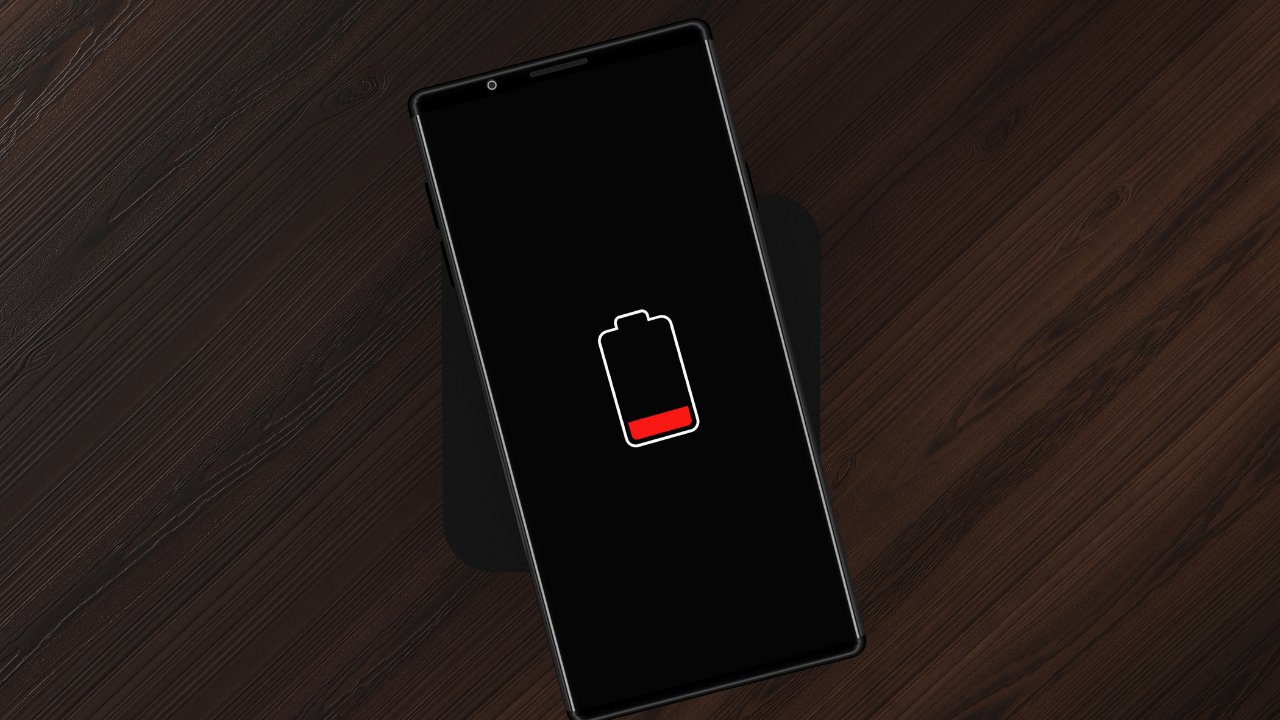
Meanwhile, your cell phone battery is flashing 3 percent.
Now you have two problems.
You still haven't found the flashlight.
And you're quickly using up the little power you have left.
Adversity can feel a lot like searching through that junk drawer in the dark.
Something unexpected happens, and suddenly your life feels messy.
You don't know where to look.
You don't know what to do first.
And your emotional battery may already be running low.
So, you start digging through everything that is wrong.
Why did this happen?
Why now?
Why me?
What else could go wrong?
You replay conversations.
You think about what you lost.
You focus on what someone did or didn't do.
You keep searching through the same pile of problems hoping you'll somehow find an answer.
But the longer you stay there, the more energy you use.
At some point, you need to stop digging through the clutter and ask:
What do I actually need right now?
Maybe the flashlight is buried under the mess.
Maybe there is another source of light nearby.
Maybe someone can help you find it.
That is the difference between looking only for problems and beginning to look for possibilities.
It doesn't mean the problem isn't real.
It doesn't mean you shouldn't feel angry, sad, disappointed, afraid, or frustrated.
Those emotions need to be acknowledged.
But there is an important difference between acknowledging your emotions so you can process them and move forward and repeatedly rehearsing those emotions until complaining becomes a habit.
One helps you move through adversity.
The other can keep you stuck inside it.
Acknowledging Your Emotions Is Not Complaining
Feeling angry, disappointed, sad, frustrated, or afraid is not complaining.
Those emotions are normal.
When something difficult happens, you need time to acknowledge what you feel.
You don't have to smile through your pain.
You don't have to pretend everything is fine.
And you certainly don't have to be grateful for something that broke your heart.
There is a big difference between saying:
"This is hard, and I'm hurting."
and repeatedly saying:
"Everything is terrible. Nothing ever works out for me. Why does this always happen to me?"
The first statement acknowledges reality.
The second can become a pattern.
You may need to cry.
Talk to someone.
Journal.
Pray.
Rest.
Seek professional support.
Or simply admit:
"I don't like what is happening right now."
That can be healthy.
But emotions also need somewhere to go.
Eventually, there comes a point when you have to ask:
What can I do from here?
That is where movement begins.
You may not control what happened.
But you still have some control over what happens next.
Are You Processing the Problem or Rehearsing It?
Talking about what happened can help us heal.
A trusted friend, counselor, coach, pastor, or family member can help us make sense of our emotions.
Writing about an experience can also help us organize thoughts that feel scattered.
But pay attention to whether you are processing the problem or rehearsing the problem.
Processing might sound like:
"I'm really disappointed this happened. I need some time to think about what I want to do next."
Rehearsing sounds more like:
"I can't believe this happened. It's so unfair. Everything always goes wrong for me."
Again.
And again.
And again.
The story doesn't change.
The complaint doesn't change.
And no action follows it.
Ask yourself:
Am I talking about this because it is helping me process what happened, or am I simply repeating the problem?
There is no deadline for grief.
There is no perfect timeline for adjusting to a major life change.
But when the same complaint keeps cycling without moving toward acceptance, support, a decision, or action, it can keep you emotionally stuck.
At some point, the question has to change from:
"Why did this happen?"
to:
"What can I do now?"
Chronic Stress Can Make Clear Thinking More Difficult
Have you ever tried to make an important decision when you were extremely upset?
It's difficult.
Your thoughts race.
Everything seems urgent.
You may jump to conclusions or imagine the worst possible outcome.
Research on stress and the brain shows that stress can interfere with functions associated with the prefrontal cortex, the area involved in working memory, attention, flexible thinking, inhibition, and other executive skills we use to make thoughtful decisions.
Research examining stress and decision-making also suggests that stress can influence the choices people make, although the effects vary depending on the person and situation.
Think about what that means during adversity.
You're already dealing with something difficult.
Then you repeatedly focus on:
- what went wrong,
- what isn't fair,
- what someone did to you,
- what you've lost,
- what might go wrong next.
Your mind never seems to get a break.
Remember that cell phone with 3 percent battery?
Your mental and emotional energy can feel just as limited during a difficult season.
You need that energy for something useful.
You need it to make decisions.
Solve problems.
Ask for help.
Research your options.
Think creatively.
And recognize possibilities you might otherwise miss.
What You Look for Is What You Tend to Notice
Imagine buying a blue SUV.
Suddenly, you start seeing blue SUVs everywhere.
Were thousands of people inspired to buy one because you did?
Of course not.
They were already there.
You simply started noticing them.
Something similar happens with the way we look at life.
If you're constantly asking:
"What else can go wrong?"
your attention stays focused on problems.
Psychological research has long examined attentional bias—our tendency to give more attention to certain kinds of information than others.
You don't need to understand neuroscience to recognize this in everyday life.
One person cuts you off in traffic.
You spill coffee on your blouse.
Someone sends you an irritating email.
Then you announce:
"This day is awful!"
But wait.
It's 9:17 in the morning.
Are you really going to give the next fourteen hours to three frustrating moments?
Try asking another question.
What else happened?
Maybe the sunrise was beautiful.
Your favorite song came on the radio.
Someone held the elevator.
Your coworker made you laugh.
Those moments count too.
The goal isn't to stop noticing problems. The goal is to stop noticing ONLY problems.
Shift From Problems to Possibilities
Problems demand our attention.
That makes sense.
When something goes wrong, you naturally want to understand it and fix it.
The problem comes when your attention gets stuck there.
You identify the problem.
Then talk about it.
Think about it.
Retell it.
Analyze it.
And wonder why you still feel stuck.
At some point, you need to move from:
"Here is what is wrong."
to:
"What is possible from here?"
That doesn't mean ignoring reality.
It means expanding your view of reality.
Yes, the relationship ended.
What possibilities exist now?
Yes, the job disappeared.
What skills, contacts, resources, or opportunities do you still have?
Yes, your health changed.
What can you still do?
Yes, your plans fell apart.
What other path might be available?
Possibility thinking doesn't promise that every problem has an easy answer.
It simply reminds you:
The first answer is not always the only answer.
Gratitude Helps You Look Beyond the Problem
One practice that helped me throughout my adversities was learning to hunt the good stuff.
Sometimes I had to look pretty hard.
I wasn't grateful for breast cancer.
I wasn't grateful for losing my son by suicide.
I wasn't grateful for needing a heart transplant.
I wasn't grateful for the sudden end of my marriage after 27 years.
Those experiences hurt deeply.
But even during those painful seasons, there were still things I could appreciate.
A kind nurse.
A friend checking on me.
A successful doctor's appointment.
Someone making me laugh.
A peaceful morning.
A good meal.
Another day.
Gratitude gave my mind somewhere else to rest besides my problems.
It reminded me that while something difficult was happening, difficult was not the ONLY thing happening.
Research supports the value of this simple practice.
A systematic review and meta-analysis of 64 randomized clinical trials found that gratitude interventions were associated with greater feelings of gratitude, better mental health, more positive moods and emotions, and fewer symptoms of anxiety and depression. The authors concluded that gratitude practices may be useful as a complement to other approaches for supporting mental health rather than as a replacement for professional treatment when it is needed.
A separate systematic review of workplace gratitude interventions examined nine randomized controlled trials. Eight of the studies used gratitude-list exercises, and the review found improvements in perceived stress and depressive symptoms, while results for overall well-being were inconsistent. The researchers also noted substantial differences among the studies and called for more research.
That distinction matters.
Gratitude is a practice, not magic.
It doesn't erase the problem.
It helps you see beyond it.
Start With Tiny Things to Be Grateful For
When you're going through a major setback, someone telling you to "count your blessings" may feel irritating.
Especially when you don't feel blessed.
So don't start big.
Start tiny.
Ask yourself:
What is one thing that is okay right now?
Maybe:
- The sun is shining.
- Your coffee is warm.
- Someone smiled at you.
- A stranger held the door open.
- A friend checked on you.
- Your favorite song came on.
- Your car started.
- You laughed at something silly.
- You completed one small task.
- You made it through another difficult day.
These things may seem insignificant compared with what you're facing.
That's okay.
Gratitude doesn't have to be big to matter.
Small moments can help widen your perspective.
They remind you that the difficult thing in front of you is real, but it is not the whole picture.
Replace Complaining With Better Questions
Habits often need a replacement.
If you simply tell yourself:
"Stop complaining."
What are you supposed to do instead?
Ask better questions.
When you catch yourself repeating the same complaint, try asking:
- What part of this is in my control?
- What can I do next?
- What haven't I tried yet?
- Who could help me?
- What resource could I use?
- What possibility am I overlooking?
Those questions shift your attention toward action.
Suppose you're stuck in traffic.
Instead of:
"This traffic is ridiculous. I'm so sick of this commute."
Try:
"I'm frustrated that traffic isn't moving. What can I do with this time?"
Maybe you can listen to a podcast.
Listen to music.
Call someone hands-free.
Or enjoy a few quiet minutes.
You aren't pretending traffic is wonderful.
You're choosing what to do with the moment you have.
That is within your control.
Keep a Possibilities and Gratitude Journal
One simple habit can help train you to look beyond problems.
Create a note on your phone called:
Possibilities and Gratitude
Each day, record one to three things.
They can be something you're grateful for.
Or they can be a possibility you noticed.
For example:
Today I noticed:
- My friend offered to introduce me to someone who might help.
- I felt better after taking a walk.
- I found an article that gave me a new idea.
Done.
The important part is consistency.
You're practicing the habit of noticing.
Over time, you build a collection of reminders that even during difficult seasons, there were still good moments, resources, choices, and possibilities available to you.
Try a Photo or Audio Gratitude Journal
Maybe you don't enjoy writing.
Take pictures instead.
Create an album on your phone called:
Good Stuff
Photograph little moments that remind you life contains more than problems.
A beautiful sunrise.
Your grandchild laughing.
Flowers blooming.
Lunch with a friend.
A favorite book.
A peaceful walk.
A small accomplishment.
You can also record short audio notes.
"Today was hard, but I'm grateful my friend checked on me."
"I'm grateful I laughed today."
"I'm grateful I made a little progress."
These don't need to be polished.
They are simply evidence you can return to on a difficult day.
Use My "Thank Goodness It's Not Worse" Practice
One of my default practices during adversity became:
"Thank goodness it's not worse."
Then I would list three ways my situation could have been worse—but wasn't.
This wasn't about comparing my suffering to someone else's.
It was about perspective.
For example:
"This is difficult, but thank goodness..."
- I have people willing to help me.
- I have access to information and resources.
- I still have choices available to me.
Sometimes the good news was simply:
I'm still here.
This became what I call my Reality Mantra:
I am grateful that it's not worse because I could be experiencing ________.
That practice helped interrupt catastrophic thinking.
It reminded me that my mind could race toward the worst-case scenario even when I was not actually living in it.
4 Ways to Shift From Problems to Possibilities During Setbacks
If possibility thinking doesn't come naturally right now, that's okay.
It's a skill you can practice.
1. Acknowledge What You Feel
Name the emotion.
Give yourself room to experience it.
Talk to someone or seek professional support when you need it.
But remember:
Acknowledging an emotion is different from building a home inside it.
2. Catch the Complaint
Notice when you are repeating the same complaint without moving toward anything.
Ask:
Am I processing this problem, or am I rehearsing it?
That question alone can create awareness.
3. Ask What Is Possible
Turn your attention forward.
Ask:
What can I do now?
Maybe the answer is very small.
Make one call.
Send one email.
Research one option.
Ask one person for help.
Take one walk.
Make one decision.
Tiny actions count.
You don't have to solve your entire problem today.
You just need your next step.
4. Record the Evidence
Keep track of what helped.
Write down good moments.
Save useful ideas.
Notice the people and resources that showed up.
When your mind tells you:
"Nothing is working."
you will have evidence that says:
That's not completely true.
Life Is Not Simply Success or Failure
Life isn't meant to be one long string of perfect days.
Change happens.
Plans fall apart.
People disappoint us.
Our bodies change.
Relationships change.
Careers change.
People we love leave us.
Life asks us to continually adjust to things we didn't expect.
I don't believe life is simply divided into success or failure.
Life is meant to be fully lived and experienced.
There will be joy.
There will be pain.
There will be laughter.
There will be tears.
There will be accomplishments.
There will be lessons.
And there will be moments when you're standing in the middle of something you never wanted, wondering what you're supposed to do next.
Those experiences can strengthen you.
They can clarify what matters.
They can deepen your appreciation for the people you love.
And they can lead you toward paths you may never have considered before.
In Flourishing After Adversity, I talk about the positive growth that can sometimes follow hardship, including greater personal strength, stronger relationships, a deeper appreciation of life, new possibilities, and a renewed understanding of meaning and purpose.
Not because adversity itself is good.
But because growth can still come from something difficult.
Problems Are Real, but They Are Not the Whole Story
You don't have to become relentlessly positive.
That's not the goal.
You need to become willing to see the whole picture.
Yes, there is a problem.
And there may be a possibility.
Yes, something ended.
And something new may eventually begin.
Yes, you're disappointed.
And you still have choices.
Yes, your life changed.
And your story isn't finished.
Moving forward begins when you stop asking only:
"What went wrong?"
and begin asking:
"What is possible now?"
Think back to that dark room and the overflowing junk drawer.
Your battery is limited.
You can spend it pulling out the same clutter again and again.
Or you can use the light you have left to look for what will help you move forward.
Hunt the good stuff.
Notice your choices.
Look for possibilities.
Take one small action.
Then take another.
Because during adversity, learning to look beyond the problem can remind you of something important:
Hard is not the same as hopeless.
Put It in Action
Before you move on with your day, take sixty seconds.
Think about one problem you've been focusing on lately.
Acknowledge how you feel about it.
Then ask yourself:
What is one possibility I haven't considered yet?
Write it down.
You don't have to act on every possibility.
Just start training yourself to look for them.
Because the more possibilities you see, the more choices you have.
And choices help you move forward.
Keep Moving Beyond Adversity
If you're walking through an unexpected life change and wondering how to move forward, I invite you to listen to the Flourishing After Adversity Podcast.
Each episode offers practical strategies, encouragement, and real-life insights to help you strengthen your resilience, focus on what you can control, and discover new ways forward.
You don't have to have everything figured out.
You just need somewhere to begin.
So what about you?
Will you spend today looking for problems—or will you start looking for possibilities?
Grab Your Free Guide!
The Reframe the Spiral: 5 Coping Strategies to Shift Negative Thoughts & Reclaim Your Day workbook walks you step-by-step through 5 proven mindset strategies to help you stop negative thoughts in their tracks and reconnect to your strength. You'll learn how to:
- Stop letting your inner critic lead your day
- Discover clarity despite chaos
- Calm intense emotions
- Rebuild your self-trust and confidence
- Create a plan for real possibility
Stay connected with news and updates!
Join our mailing list to receive the latest tips and proven coping strategies to strengthen your resilience. You CAN turn obstacles into opportunities and flourish in life.
We hate SPAM. We will never sell your information, for any reason.

Author